


Le mystère de l’homme qui n’a jamais fait caca
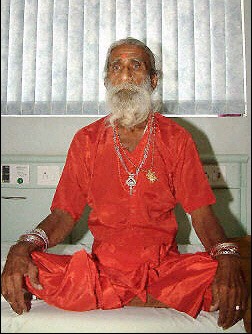
De notre envoyé spécial. L’homme est assis sur son lit, dans un hôpital d’Ahmedabad, une ville de l’ouest de l’Inde. Un casque sur les oreilles. Je m’approche de lui. Vous écoutez quoi, je lui demande. « Jeuner en paix » , me dit-il. Connais pas.
Evidemment, ça n’a pas manqué, les scientifiques cherchent à comprendre ce mystère. Ils ont effectué une batterie de test sur le vieil homme.
Ils n’en reviennent pas. Pendant deux semaines l’homme n’a rien ingurgité et rien éliminé. Ils veulent comprendre. Il n’a jamais rien fait de sa vie et ça lui a réussi. Si ça se trouve ces examens scientifiques vont nous le déglinguer.
On en saura plus dans les mois qui viennent. Si les chercheurs arrivent à comprendre ce qui se passe dans l’organisme de cet homme ils pourront le mettre à profit pour les militaires et les victimes de catastrophes naturelles. Voilà où mène la méditation.

203 réactions à cet article
-
Les gens comme lui qui arrivent à vivre sans nourriture, c’est quelque chose d’archi-connu depuis des décennies. Du moins ça devrait l’être si les zététistes et autres fanatiques du rationalisme ne tenaient pas les cordons de l’information..
On trouve cela dans l’Hindouisme comme dans le christianisme et ailleurs. Pour mémoire rappelons ici Marthe Robin, que Jean Guitton fréquentait assidument. De même la religieuse Anne-Catherine Emmerich.. Il y en a plein d’autres...Même chose pour le phénomène des corps imputrescibles après leur mort, et dégageant une odeur suave et paradisiaque, d’où l’expression « mort en odeur de sainteté ». Là encore, phénomène archi-connu mais soigneusement occulté par les médias dominants, cela afin qu’on ne se pose pas trop de questions...Et je ne parle pas des autres phénomènes parapsychologiques. Les témoignages sont nombreux.. Je renvoie à l’ouvrage d’Aimé Michel : Métanoïa, consacré aux phénomènes physiques, absolument prodigieux, du mysticisme.-
Même chose pour le phénomène des corps imputrescibles après leur mort, et dégageant une odeur suave et paradisiaque, d’où l’expression « mort en odeur de sainteté ». Là encore, phénomène archi-connu mais soigneusement occulté par les médias dominants, cela afin qu’on ne se pose pas trop de questions...Il y a un cas connu de dépouille imputrescible : celle du Lama Itigilov.
J’ai eu du mal à savoir, vu le ton de l’article, s’il s’agissait d’un sujet sérieux ou pas. Cela étant, dans ce cas, comme dans le cas du lama Itigilov, je suis stupéfait par ces scientifiques qui essaient de « comprendre ». Ils passent le yogi au scanner, à l’IRM, ils regardent son cerveau, ils veulent « comprendre ». Pourtant l’important n’est pas de savoir ce qui se passe dans le corps du yogi, mais de savoir comment il applique son esprit à la méditation, comment il vit, comment il pense, quels enseignements il a à nous donner, etc. Mais quand un doigt montre la lune, certains le passent au scanner...
-
@ Gollum :
J’ai ouï d’une mystique qui se nourrissait des rayons du soleil ; est-ce l’une de celles auxquelles vous faites allusion ? Pour ma part j’ai vécu en Inde environ deux ans, et j’ai séjourné en Haïti, à Bahia, au Benin, etc.... J’ai vu toutes sortes de choses impossible avec lesquelles j’ai paresseusement fait ma oaix sans chercher même à les expliquer. Il n’y a que le solipsisme sans concession qui explique tout... et je n’y vois pas de plaisir.PJCA -
Rounga : "J’ai eu du mal à savoir, vu le ton de l’article, s’il s’agissait d’un sujet sérieux ou pas."
Ah bon ? Tu vas pas me croire, mais je te croyais vraiment plus perspicace,
-
A Allard : il me semble que dans le cas de Marthe Robin précisément, mais je me fie là à ma mémoire, c’est donc sujet à caution, qu’elle allait beaucoup mieux quand la lumière n’était pas filtrée par les volets... autrement dit, il n’est pas impossible que ces gens se nourrissent de lumière.
Rajoutons que dans toute philosophie religieuse qu’elle que soit sa provenance, la lumière est une émanation du divin. Et même sa première émanation. Il est donc logique qu’une personne plus proche de « Dieu » (guillemets pour ne pas froisser certaines personnes..) se nourrisse précisément de lumière..Sinon, l’argument utilisé par un intervenant à propos de l’impossibilité de cette chose, sous prétexte, que cela violerait le deuxième principe de la thermo-dynamique, est complètement imbécile, vu que ce deuxième principe n’est valable que pour les systèmes clos.Or l’être humain N’EST PAS un système clos.. Il est traversé de part en part par toutes sortes de particules et d’énergies et dans le cadre actuel de nos connaissances, prétendre une impossibilité relève de l’aveuglement idéologique.Je rajouterai même qu’il n’y a JAMAIS de systèmes clos dans la nature, stricto sensu, vu que tout est en interaction sur tout. Voir le principe de non-séparabilité en physique quantique. -
Ah tiens, Deneb, j’aimerais bien que tu me répondes à propos d’un commentaire que j’ai laissé à la suite d’une de tes réflexions vertigineuses.
Tu expliquais, en l’occurrence, que croire en Dieu c’est du nombrilisme, et j’imagine que par conséquent il vaut mieux placer sa foi en l’Humanité, chose que tu recommandes régulièrement. En toute innocence, je te faisais remarquer sur le ton de l’ironie (oui, j’ai l’innocence taquine) que l’Humanité ayant foi en l’Humanité est justement l’attitude la plus nombriliste qui soit... Mais je ne doute pas que ton intelligence va m’indiquer d’une manière fulgurante comment résoudre cette contradiction qui n’est sûrement qu’une apparence à laquelle seuls les simples d’esprits se laissent prendre.Et en ce qui concerne ma « perspicacité », j’ai effectivement cru à une parodie, au vu du titre, et comme j’ignorais tout de cet indien je pensais bêtement (ça m’arrive, oui) que le sujet était peut-être inventé de toutes pièces par l’auteur. Cela dit il m’a bien fait marrer et ceux qui y ont vu du racisme sont des cons.
-
Évidemment ceci n’ est que balivernes
Y a t’ il des gens pour croire çà (à part des religieux)
N’ écoutez pas ce qui est sur la toile :il y a plus de mensonges que de véritésUtilisez votre cerveau : c’ est le meilleur juge devant de tels mensonges
PLUS C’ EST GROS PLUS ÇA PASSE
-
Excellente remarque...
Ouf... Il y a des esprits acérés, et précis, ça existe, merci !
-
Je précise excellente remarque que celle de @Gollum ... C’est que le développement des commentaires Agoravox laisse à désirer...
-
oui c’est le complot des média dominants que de masquer que le monde est gouverné par des forces occultes. D’ailleurs toutes les découvertes scientifiques et la technologie qui en découle sont des escroqueries, ce qui fait marcher votre tv plasma ce sont les esprits plasmatiques, ce qui fait fonctionner votre modem adsl c’est un générateur de mysticisme intégré, l’ibuprofène qui calme votre mal de tête est un extrait de moelle de yogi hindouiste, ce qui fait planer les avions n’est pas l’aérodynamique mais la lévitation bouddhiste. Cet homme n’est pas un mystique c’est un mystificateur et tout comme yuri geller et biens d’autres en leurs temps il se fera démasquer.
-
slipenfer 13 mai 2010 11:04respirianisme, abstinence de nourriture inédie
une tranche de jambon alors OUPsssss !!! j’ai dit une bêtise.
un Bondar peut-être ?Omnibuzz vous êtes un marrant

comme disait le pouette TouBitpoilCuFesse
-
Ça me fait penser aux immortels taoïstes, retirés dans les montagnes qui « se nourrissent de brume ».
-
Article très moyen sur un sujet qui mérite beaucoup plus de sérieux. Développez un minimum en faisant le lien avec Ram Bahadur Banjan, surnommé le petit Bouddha qui a annoncé son retour en 2012( encore cette année précisément) et en expliquant le Prâna. Bref, Omnibuzz vous survolez le « buzz » ( ramdam pardon). J’attends un compte rendu réel d’Olivier Cabanel, bien plus talentueux sur ce genre d’info.
-
Encore un coup d’ un constipé , il s’ appelle Villach ?
-
« En position du lotus il médite. L’indien est médisant. Il faut le savoir. » Je suppose que c’est une fâcheuse faute à comprendre en méditant. Puis-je en profiter pour apporter ma pierre à cet édifice passionnant : http://www.agoravox.fr/culture-loisirs/etonnant/article/ames-rigides-s-abstenir-52317 En effet, l’homme qui arrive à se défaire de ses chaines le rattachant à ce monde matériel qu’il ingurgite en fermant les yeux doit avoir une vision prépondérante sur notre faculté à céder quotidiennement à des quantités de drogues programmées. Un seule d’entre elles manque au tableau et la journée est foutue.
-
Je ne sais pas si cet homme n’a jamais fait caca puisqu’il n’a rien ingurgité donc rien éliminé, mais je sais qu’Omnibuse fait caca chaque fois qu’il pond un torchon qu’on ne peut apeller ni article ni papier (sauf PQ)...Il serait tant qu’il dépasse un peu le stade annal ou il se complait lamentablement...
-
J’en conaissais un qui a reussi a vivre sans manger. Il n’a, hélas, pas pu démontrer au monde son exploit, il est mort juste après avoir reussi.
-
La bonne blague débile du mécréant de service. Rien d’autre à dire ? une autre blague débile, peut-être....
-
omnibuzz finit par nous dévoiler son immense mépris pour l’humanité
un racisme qu’il voudrait ordinaire
à vomir
c’est pas l’humilité qui vous étouffe, mais l’orgueil, la vanité incommensurable
un langage parfaitement ordurier
vous vous prenez pour un génie pauvre type ou c’est la jalousie qui vous étrangle ?
après nous avoir harcelé et gangréné le site de vos vidéos porno à l’infini
voici qu’il vient cracher sur un sage
vous descendez dans les oubliettes de l’esprit mon pauvre-
-
"Si les chercheurs arrivent à comprendre ce qui se passe dans l’organisme de cet homme ils pourront le mettre à profit pour les militaires"
Ca ressemble à une annonce de réduction du budget cantine dans l’armée.
-
Oui, et là Sarkozy et le Medef s’auto-congratulent : « Nous dans notre pays, c’est encore mieux. Les gens n’ont rien à manger mais en plus ils travaillent. »
-
« Il n’a jamais rien fait de sa vie et ça lui a réussi. »
dés comme ça, j’en connais une flopée....-
Ceci est une supercherie évidente.
Si c’était vrai, la conséquence ne serait pas de « comprendre comment le corps peut survivre à des situations extrêmes ». Ce serait ni plus ni moins qu’une remise en cause de principes fondamentaux de la physique :
Le premier principe de la thermodynamique serait transgressé. Celui-ci affirme que l’énergie est toujours conservée. Ne recevant pas de source d’énergie, un système ouvert ne peut en produire, sans se dégrader. S’il est fermé, il ne peut pas en produire.
On remarque aussi dans les domaines para-scientifiques divers ingrédients qui reviennent régulièrement et qui sont présents ici :
- L’homme est au centre de l’allégation.
- Il est question de pouvoir, de capacités hors norme.
- Ces capacités ouvrent la voie vers une amélioration de la vie.La seule question qui me semble intéressante est celle de l’endroit de la supercherie. Lorsqu’il est question de l’homme qui a vu l’homme qui a vu l’ours, la tromperie peut se trouver à chacun des niveaux. Prenons pour base de réflexion l’article de Tristan Vey dans le Figaro :
http://www.lefigaro.fr/sciences-technologies/2010/05/10/01030-20100510ARTFIG00647-le-mystere-de-l-indien-qui-jeune-depuis-plus-de-70-ans.php
Premier niveau :
L’homme en question a berné un groupe de 30 médecins.Deuxième niveau :
Un groupe de 30 médecins a berné de journaliste.Deuxième niveau (variante) :
Une ou plusieurs personnes (pas forcément médecins) se réclamant d’un groupe de 30 médecins ont berné un journaliste de terrain.Troisième niveau :
Un journaliste de terrain a berné Tristan Vey.Quatrième niveau :
Tristan Vey a berné une partie des lecteurs du Figaro.Ces 4 hypothèses sont chacune beaucoup plus probable qu’une remise en cause du premier principe de la thermodynamique.
On peut facilement éliminer la possibilité d’une supercherie à un niveau en remontant soi-même au niveau précédent.
-
il est filmer
il est juste dit qu’il a ni bu ni manger depuis 15jrs
rien ne dit qu’il est pas en hibernation -
Peut-être est-il filmé. As-tu le lien qui me permette de voir le film ?
-
@ Giordano Bruno
Excellente démonstration ! -
Merci docdory. Nous disons d’ailleurs à peu près la même chose.
-
« Peut-être est-il filmé. As-tu le lien qui me permette de voir le film ? »
c’est recent alors non
et je lis pas l’indi
http://www.google.fr/search?q=70a+sans+boire+manger&ie=utf-8&oe=utf-8&aq=t&rls=com.pclinuxos:en-US:unofficial&client=firefox-a -
Docdory :« @ Giordano Bruno - Excellente démonstration ! »
En effet ! Mais l"article est à mourir de rire aussi. Le 2ème voir n-ième degré est assez mal perçu sur AV. Et dire que la langue française à permis aux plus grands de cet art de s’exprimer, je parle bien sûr de Ionesco et Beckett.
-
@ deneb lis plus bas en anglais
-
foufouille :
Waiting for Godot is Beckett’s translation of his own original French version, En attendant Godot -
@ deneb
google a traduit plus bas -
@ Deneb
Effectivement , il y a la possibilité, et même la probabilité, que l’article soit un article totalement ironique ! Mais j’ai déjà remarqué que l’ironie est très difficile à faire passer sur internet en général ( pas seulement sur agoravox ) . -
Giordano Bruno : Ceci est une supercherie évidente.
Vous n’en savez rien, n’apportez aucun élément, n’avez rien à dire sur le fond.. Mais d’autorité vous déclarez la supercherie. Vous portez bien mal votre pseudo.Si c’était vrai, la conséquence ne serait pas de « comprendre comment le corps peut survivre à des situations extrêmes ». Ce serait ni plus ni moins qu’une remise en cause de principes fondamentaux de la physique :
Et alors ? Si cela était, la science n’est pas un dogme définitif, à moins que je me sois trompé d’église...
Le premier principe de la thermodynamique serait transgressé. Celui-ci affirme que l’énergie est toujours conservée. Ne recevant pas de source d’énergie, un système ouvert ne peut en produire, sans se dégrader. S’il est fermé, il ne peut pas en produire.
Mettons. Et s’il recevait et/ou transmutait de l’énergie sous une forme que la science n’appréhende pas, ca respecterait votre principe. D’autre part, la nature de l’énergie est un phénomene peu étudié par la science, qui ne s’intéresse qu’à des applications pratiques, et encore, surtout à celles qui rapportent.
Curieux de voir comme les scientistes sont si peu aptes à sortir de leur cadre pré-défini.
« L’imagination est plus importante que la connaissance ». A Einstein.On peut facilement éliminer la possibilité d’une supercherie à un niveau en remontant soi-même au niveau précédent.
« Peu d’être sont capables d’exprimer posément une opinion différente des préjugés de leur milieu. La plupart des êtres sont mêmes incapables d’arriver à formuler de telles opinions. »
[ Albert Einstein ]« Si les faits ne correspondent pas à la théorie, changez les faits. »
[ Albert Einstein ] -
Philou,
Dans les sciences empriques (c’est-à-dire qui n’établissent pas des vérités formelles comme peuvent le faire les mathématiques), tout peut être remis en cause. Il est toujours possible d’imaginer qu’on s’est trompé quel que soit le sujet. Peut-être la Terre est-elle plate. Peut-être que la Belgique n’existe pas. Peut-être cet indien n’a-t-il jamais mangé ou bu depuis des années. Ce doute poussé à l’extrême amène au solipsisme. Rien d’autre que mon esprit n’existe. Même si ces assertions ne peuvent être formellement invalidées elles n’en demeurent pas moins hautement improbables.
Parmi les énoncés sur le monde, certains sont largement étayés par l’expérience. D’autres sont beaucoup plus improbables.
Un énoncé improbable qui remettrait en cause des pilliers de la physique nécessiterait des preuves très solides. Relater qu’un homme a été observé n’y suffirait absolument pas. Il faudrait des expériences répétées et répétables par divers chercheurs montrant comment le premier principe de la thermodynamique peut être violé.
J’affirme que cet homme n’a pas pu vivre pendant des années sans boire ni manger, comme je pourrais affirmer que vous n’allez pas gagner au loto 100 fois de suite sans tricherie. Dans les 2 cas, on peut toujours imaginer un monde où j’aurais tort, mais le risque de me tromper est tellement infinitésimal que je n’hésite pas à le prendre.
Pour l’instant, l’hypothèse d’une supercherie est infiniment plus probable que celle d’un pouvoir magique car elle nécessite moins de remises en cause de notre conception du monde.
-
Doc : l’ironie est la seule arme efficace contre la connerie. Qu’elle passe mal sur l’internet, je n’en suis pas si sûr, j’en vois de très drôle et très corrosive. Peut-être plus dans d’autres langues. J’ai l’impression que dans la culture française on se prends de plus en plus au sérieux, peut-être c’est dû à la morosité ambiante et aux annonces de crises imminentes. L’art du délire savant et de la sagesse immonde s’est un peu perdu dans la culture francophone, j’espère que c’est temporaire.
-
au faux Giordano Bruno :
Comment avez-vous osé vous accaparer de ce pseudo, celui d’un hérétique brûlé par l’inquisition pour ses idées novatrices ?« elle nécessite moins de remises en cause de notre conception du monde. » dites-vous, mais sûrement pas vous !Justement le vrai Bruno avait osé remettre en cause la conception du monde du fin du Moyen-âge. -
@ giordano
ya pas de remises en cause de la physique
on sait juste pas comment il fait (meme pour tricher)
le type existe bien
et le(s) docteurs aussi
ca se passe en inde pas en france -
@ Deneb
D’accord , il m’arrive d’être d’une ironie corrosive, mais en général , c’est perceptible sans ambiguïtés, je fais attention à ce que ça ne puisse être pris au premier degré. Dans le cas du présent texte , il est difficile de dire avec certitude si l’auteur se fout complètement de ceux qui croient à cette histoire, on peut aussi bien penser en le lisant qu’il n’a pas d’opinion bien arrêtée sur la question . -
@ Giordano Bruno
A tout prendre , la probabilité de gagner 100 fois de suite sans tricher au loto est infinitésimale , mais pas totalement absente de ce que l’on pourrait appeler l’univers des possibles, cette probabilité , aussi infinitésimale soit-elle, reste au moins calculable par un statisticien .Par contre, vivre des dizaines d’années sans boire ni manger est rigoureusement impossible car contraire aux lois élémentaires de la physique . -
@ docdory
et le reste ?
15 jrs sans boire ni manger
au minmum 9jrs
He was kept in Sterling Hospital (Gurukul Road, Ahmedabad) from 13/11/03
(10:00 AM) to 22/11/03 (10:00 AM) for observation. Directors of Sterling Hospital
specially Dr. V. N. Shah and the management committee of Sterling Hospital kindly
consented to look after the ethical aspects and the funds for the project including various
tests. -
docdory,
Les lois de la physique sont des énoncés qui n’ont pas été invalidés par les observations. Nous n’avons jamais de preuve absolue de la validité d’un énoncé empirique. Pour prendre un exemple éculé, la mécanique newtonienne ne fut longtemps jamais prise en défaut par les faits. Cela ne l’a pas empêché d’être contredite par le relativité. C’est pour cela que je pense qu’il faut toujours laisser la porte ouverte à la possibilité d’une remise en cause majeure des lois physiques. Je dis juste que les données que nous avons sur cet homme sont bien trop faibles pour permettre une telle remise en cause. L’hypothèse de la supercherie est sans commune mesure plus probable.
-
wermelinger et Philou, Giordano Bruno (le vrai) a eu l’intelligence de s’opposer à l’Eglise. Aujourd’hui, ce n’est plus le pouvoir ecclésiastique qu’il faut affronter. Ce n’est pas non plus la science. Ce sont les médias de masse.
-
@ Giordano Bruno
Nous sommes d’accord . -
G B : « Un énoncé improbable qui remettrait en cause des pilliers de la physique nécessiterait des preuves très solides. Relater qu’un homme a été observé n’y suffirait absolument pas. Il faudrait des expériences répétées et répétables par divers chercheurs montrant comment le premier principe de la thermodynamique peut être violé. »
- La plus belle et la plus grande émotion que nous puissions éprouver est le sentiment du mystérieux. Il est à l’origine de la vraie science. Quiconque ne connaît pas ce sentiment, quiconque n’est plus capable de s’étonner, de se laisser porter par ce saisissement est comme s’il était déjà mort. Albert Einstein
-
@ Giordano
« Si c’était vrai, la conséquence ne serait pas de »comprendre comment le corps peut survivre à des situations extrêmes". Ce serait ni plus ni moins qu’une remise en cause de principes fondamentaux de la physique :
Le premier principe de la thermodynamique serait transgressé. Celui-ci affirme que l’énergie est toujours conservée. Ne recevant pas de source d’énergie, un système ouvert ne peut en produire, sans se dégrader. S’il est fermé, il ne peut pas en produire."
J’espère que vous n’êtes pas un cercheur, ou quoi que se soit...
Ce que vous dites est stupide !!
La première chose que ferait qui que se soit de sensé, après avoir constaté que le phénomène est authentique, c’est de trouver quel est l’apport énergétique alternatif qui alimente ce corps.
-
J’ai envie de chialer en vous entendant, tellement votre démonstration est pitoyable ! Si vous appliquez le principe de la conservation de l’énergie, qui est valide (et encore !) pour la matière, alors il n’y aura jamais création de rien du tout ! La création, ce qui est nouveau, est toujours apportée ex nihilo et renouvelle l’ancien, sinon, c’est la mort... Si Einstein s’est suffi de votre principe, il n’y aurait pas eu de relativité ; si vous êtes égal à ce que vous mangez, alors là, il vaut mieux un robot car moins capricieux... Eh oui, le matérialisme se drape de beaux discours, alors qu’il est creux ... Et se refuse de regarder les choses en face : ce bonhomme défie tes lois mécaniques, alors ça ne t’étonne toujours pas ??
Sans rancune
zalou -
Docdory ; Je ne sais pas si c’est parce que dans ma jeunesse, obligé de continuellement trier entre le bon grain et l’ivraie pour se faire une idée du monde à travers la presse communiste j’ai un peu appris à lire entre les lignes, mais l’évidence d’une ironie me semble plus que flagrante. Il y a pratiquement un contresens par phrase. C’est plus que consternant ; en effet, si l’expression libre doit passer par le 2ème degré pour se faire entendre, c’est que sa liberté est menacée, comme dans une dictature. Et dans une dictature, l’impertinence est le seul comportement honnête.
-
@ Giordano Bruno
Bonjour,
C’est votre opinion, sans plus, ici vous n’apportez rien de plus que l’auteur quand à la réalité de cet article. Vous estimez qu’il y a erreur ou tromperie à cause des probabilités ! En plus vous partez du postulat que tout être humain est fermé, la physique quantique vous fait un pied de nez.
Votre commentaire raisonné repose sur votre savoir, or vous admettez que tout savoir peut être - ou dois être - remis en cause par de nouveaux éléments, mais si c’est le cas ici... n’en écartez vous pas simplement l’existence par commodité ? Nier ce que l’on croit pour réfléchir est difficile, que le dogme défendu soit scientifique ou mystique ^^
Enfin, ce n’est ni le premier ni le dernier yogi indien que les crâne d’œufs examineront sous toutes les coutures en perdant leur latin ! Ni même le dernier humain. Vraie ou fausse, une histoire amusante.
-
Bon sujet d’article !
Mais le ton est sarcastique, ridiculisant le sujet. On se croirait dans une émission de TF1 ! Dommage.-
Ces conneries n’ont rien de drôle, il y a des morts parmi ceux qui suivent ces gourous à la noix :
-
Chantecler : pour une fois vous m’avez fait bien rire et je vous en remercie chaleureusement.
-
>>On se croirait dans une émission de TF1 !
Peut-être mais sur TF1, il font quand même bien plus intéressant dans le divertissement.
"plusieurs caméras ainsi qu’une équipe de trente médecins ont pu suivre l’homme 24h/24 lors de ses moindres faits et gestes."
Pour filmer un gars tout seul sans manger, sans piscine, pas la moindre histoire de cul. Franchement comme télé réalité, ça craint... Sauf si, on découvre que le gars mange en cachette et que la nuit, quelque nymphette vient lui tenir compagnie... Mais c’est risqué de miser là-dessus pour les producteurs de l’émission.-
Il devrait écouter Tina Turner dans Prout Mary ...
-
Article pour demain :
Visite de la fistule de Louis XIV , les écoulements et les fuites .....
-
MAIS QUE FAIT LA POLICE ? ( bis )
Ce n’est pas une erreur de frappe !!!
« Médisant » est à mettre en relation avec le mot « méditer » qui, étant utilisé dans la phrase précédente, est alors, de façon volontairement ironique, détourné de sa signification afin de provoquer un effet « humoristique » ! Cela s’appelle un « jeu de mots » ! ( Il médit(e) = médire )
Evidemment pour saisir les « jeux de mots », il faut être capable de lire et comprendre ce que l’on appelle communément en français... « du deuxième degré » !
Ca infuse dans la théière ??? -
Jet 67 : +1000 !!!
docdory, mourir de rire, ç’est déjà arrivé ?
-
@ Omnibuzz
Dans la nature , rien ne se perd et rien ne se crée. Le métabolisme de base , qui est la dépense énergétique minimum d’un individu qui ne ferait strictement rien et à une température idéale à laquelle il n’ait besoin de dépenser aucune énergie pour se réchauffer ou se refroidir, est de l’ordre de 1500 calories pour un homme , 1300 pour une femme : en effet , il faut de l’énergie pour faire battre le coeur , fonctionner les poumons , ainsi que le cerveau, qui fonctionne en permanence , même quand il ne pense à rien, cette dépense basale existe même dans un repos musculaire total .A supposer que cet homme fasse baisser son métabolisme de base à 1000 calories par jour, ça représente quand même l’équivalent d’une boite de 250 g de pâtes .Cette histoire est donc obligatoirement fausse !-
Et s’il recevait de l’énergie sous une forme que notre Sainte Science n’appréhendais pas ? Est-ce que vous prétendez connaitre tout ce qu’il y a à connaitre ?
-
@ PHILOU 17
Si Paris était petit , on pourrait le mettre dans une bouteille ! -
Il bouffe p’têt ses crottes de nez en cachette pour survivre ?
En tout cas ce qu’il fait (rien foutre) c’est vachement utile pour améliorer les choses sur Terre. Si si, y a moins de caca déjà.Désolé j’ai du mal à admirer les ascètes qui ont rien foutu de leur vie...-
-
En temps de crise , c’est très appréciable ces qualités
Dites-nous comment il fait !-
...fake à prendre au premier degré.... puisque qu’on y est, juste une précision : faudrait te nettoyer les esgourdes Omnibuzz... c’est Stéphane Eicher qu’il était en train d’écouter : http://www.dailymotion.com/video/x2pvcd_stephan-eicher-dejeuner-en-paix_music
-
Encore un article qui me fait scier
-
le jour ou il va pèter.....je vous dis pas l’odeur !......

-
Personnellement, j’aime bien le ton ironique de l’article ; je n’y vois aucun racisme, ni aucun mépris.
Ceci dit, il est vrai que le sujet est abordé de façon un peu légère (je sais, c’est voulu), pour un sujet qui questionne.
Nous sommes loin de savoir et de connaître toutes les facultés du cerveau humain sur notre physiologie ; si les faits sont avérés, c’est vrai que le sujet est important à analyser..
Il n’est pas le premier exemple de « jeune radical », comme rappelé par d’autres intervenants, mais sur une aussi longue durée, ça pose quand même de vraies questions.
En tout cas, ça réduit singulièrement les frais...
A méditer...
-
-
-
Prahlad Jani was kept for fifteen days, until May 6 (tests were completed on Thursday at 3:30pm), and reportedly did not eat, drink or go to the toilet once during the time. This was apparently shown by blood tests, hormone profiles, MRIs and angiographs. The doctors also claimed to have found that he was "more healthy than someone half his age."
-
-
-
on peut remarquer que le wiki francais est censure (milivude ?)
-
pour les faineant
Prahlad Jani (« Mataji »)Prahlad Jani, an Indian sadhu who claims to have gone without food for decades,[33] spent ten days under strict observation by physicians at Sterling Hospital, Ahmedabad, India, in 2003.[34] The study was led by Dr Sudhir Shah (http://www.sudhirneuro.org/), a well known and ardent proponent of Jain philosophy[35], the same doctor who led the study of Hira Ratan Manek. Reportedly, during the observation, he was given only 100 millilitres of water a day to use as mouthwash, which was collected and measured after he used it, to make sure he hadn’t consumed any. He was reported to enter Samadhi state of consciousness almost daily during meditation. Throughout the observation, he passed no urine or stool, but doctors say urine appeared to form in the bladder, only to be reabsorbed.[33] However, Jani was not engaged in strenuous exercise during the ten-day trial, and longer trials were not recorded under similarly strict observation. Further, his weight did drop slightly during the 10 days, casting some doubt on his claim to go indefinitely without food. Jani claims a goddess sustains him through amrit that filters down through a hole in his palate.[33] The Indian Rationalist Association has criticised the Indian Ministry of Defence for agreeing to take part in the tests, and for being taken in by a « village fraud ».[36] Sanal Edamaruku of the Indian Rationalist Association claimed to have been repeatedly denied sending an independent team to survey the room where Jani was held. He also claimed that "this particular hospital, led by this particular doctor, keeps on making these claims without ever producing evidence or publishing research." The Indian Rationalist Association also said that individuals making similar claims have all reportedly been exposed as frauds.[37]
On June 26, 2006, The Discovery Channel aired a documentary called « The Boy with Divine Powers » featuring a 5 minute interview with Prahlad Jani and Dr. Sudhir Shah.[38][39]
As of April 22, 2010, new tests are being conducted on Prahlad Jani under surveillance of 35 doctors and researchers of Defence Institute of Physiology & Allied Science (DIPAS).[40][41][42]
Rajiv Sharma, CEO of Sterling Hospital, said, “We wanted to insure Jani’s life. However, due to certain legalities, insurance firms refused our request. Finally, the state government insured his life so that the study could be conducted.”[43]
Prahlad Jani was kept for fifteen days, until May 6 (tests were completed on Thursday at 3:30pm), and reportedly did not eat, drink or go to the toilet once during the time. This was apparently shown by blood tests, hormone profiles, MRIs and angiographs. The doctors also claimed to have found that he was "more healthy than someone half his age."
During the study, a protocol of round-the-clock surveillance was followed with the help of CCTV cameras and personal observation. Mataji (Prahlad Jani) was taken out for MRI, USG, and X-ray examination and exposure to sun under continuous video recording.[44]
“During the tests we found that in Prahalad Jani’s bladder, the amount of liquid fluctuates even when he does not pass urine,” said a member of the team of medical experts that conducted medical tests. Mataji’s lung functions is quite normal, as per reports by Dr. Mukesh Patel and his team.
Dr. G. Ilavazahagan, director, DIPAS (a heavily funded branch of India’s Defence Research and Development Organisation), said, "The exercise of taking this yogi under a medical scanner is to understand which energy supports his existence, if not food or water. And if at the end of three months by which we plan to come out with observations based on this 15-day check up, we are able to reach to an explanation of this hypothesis - it would tremendously benefit mankind. The observations derived from this case study can help many soldiers, victims of calamities and astronauts - who often have to survive without food or water for long spells."[45]
Dr. Urman Dhruv, a physician, said, "We are collecting data on a person who has lived on an alternative pathway compared to an ordinary person. The comparative study of his reports of the tests conducted in 2003 and results of the recent and on-going tests would throw light on the process of aging in Jani’s body - which seems to have undergone some type of genetic transformation."[45]
Prahlad Jani grew up in Charod village in Mehsana district.[33] According to Jani’s version of events,[46], he left his home in Rajasthan at the age of seven, and went to live in the jungle.
When he reached the age of 11, he underwent a religious experience during which he became a follower of the Hindu goddess Amba. In her honour, he chose to dress as a female devotee, wearing a red sari-like garment, nose-ring, bangles and crimson flowers in his shoulder-length hair. In return, Jani believes that the goddess has sustained him ever since by feeding him with a lifegiving, invisible « elixir », which has supposedly given him the strength to continue without food or water.
For at least the past 40 years, Jani has been living, hermit-like, in a cave in the jungles close to the Gujarati temple of Ambaji. He rises at 4am, spending most of the day meditating. Amongst his followers and devotees he is commonly known as Mataji (« [a manifestation of] The Great Mother »). This name is also frequently used by Indians (regardless of their religious views) with reference to Prahlad Jani.
-
Prahlad Jani, un sadhu indien qui prétend avoir passé sans nourriture pendant des décennies [33], a passé dix jours sous stricte surveillance par des médecins à l’hôpital Sterling, Ahmedabad, en Inde, en 2003 [34]. L’étude a été dirigée par le Dr Sudhir Shah ( http://www.sudhirneuro.org/), un promoteur bien connu et ardent de la philosophie Jain [35], le même médecin qui a dirigé l’étude de Hira Ratan Manek. Selon les témoignages, lors de l’observation, il a reçu seulement 100 millilitres d’eau par jour à utiliser comme rince-bouche, qui ont été recueillis et mesurés après qu’il l’ait utilisé, pour s’assurer qu’il n’avait pas consommé d’. Il a été signalé pour entrer dans l’état de conscience Samadhi presque tous les jours pendant la méditation. Tout au long de l’observation, il passa pas l’urine ou les selles, mais les médecins disent urine semble se former dans la vessie, seulement à se résorber. [33] Toutefois, Jani n’a pas été engagée dans un exercice vigoureux pendant le procès de dix jours, et plus les essais ont été n’est pas enregistré sous observation aussi strictes. En outre, son poids ne diminue légèrement au cours des 10 jours, qui jette un doute sur sa demande d’aller indéfiniment sans nourriture. Jani revendique une déesse qui le soutient par le biais Amrit qui filtre à travers un trou dans son palais. [33] L’Association Rationaliste Indienne a critiqué le ministère indien de la Défense d’avoir accepté de prendre part aux tests, et pour être pris en charge par un « village fraude »[36]. Sanal Edamaruku de l’Association Rationaliste Indienne a affirmé avoir été à plusieurs reprises nié avoir envoyé une équipe indépendante d’enquête sur la chambre où Jani a eu lieu. Il a également affirmé que « cet hôpital en particulier, dirigé par le médecin en particulier, continue de faire ces affirmations sans jamais produire des preuves ou la publication des recherches." L’Association Rationaliste Indienne a également déclaré que les personnes apportant des créances analogues ont tous été exposés que les fraudes [37].
Le 26 Juin 2006, The Discovery Channel a diffusé un documentaire intitulé "The Boy avec les puissances divines » mettant en vedette une entrevue avec cinq minutes Prahlad Jani et le Dr Sudhir Shah. [38] [39]
En date du 22 avril 2010, de nouveaux tests sont menés sur Prahlad Jani sous la surveillance de 35 médecins et chercheurs de la Défense Institut de physiologie et de sciences connexes (DIPAS). [40] [41] [42]
Rajiv Sharma, directeur général de Sterling Hospital, a déclaré : « Nous voulions assurer la vie de Jani. Toutefois, en raison de certains aspects juridiques, les entreprises d’assurance a refusé notre demande. Enfin, le gouvernement de l’État assuré sa vie pour que l’étude pourrait être menée. "[43]
Prahlad Jani a été maintenu pendant quinze jours, jusqu’au 6 mai (tests se sont achevés jeudi à 3:30 pm), et n’aurait pas manger, boire ou aller aux toilettes une fois au cours du temps. Ce fut apparemment montré par des tests sanguins, les profils hormonaux, l’IRM et angiographs. Les médecins ont également affirmé avoir trouvé qu’il était « plus sain de la moitié quelqu’un de son âge."
Pendant l’étude, un protocole de surveillance autour du horloges a été suivie à l’aide de caméras de surveillance et d’observation personnelle. Mataji (Prahlad Jani) a été prise pour l’IRM, Secrétaire général adjoint, et l’examen aux rayons X et l’exposition au soleil dans l’enregistrement vidéo en continu [44].
« Pendant les essais nous avons constaté que dans la vessie Prahalad Jani, le montant des fluctue liquide, même quand il ne passe pas l’urine », a déclaré un membre de l’équipe d’experts médicaux qui ont effectué des tests médicaux. fonctions pulmonaires Mataji est tout à fait normal, selon les rapports par le Dr Mukesh Patel et son équipe.
Dr G. Ilavazahagan, directeur, DIPAS (une branche fortement financé des recherches pour la défense de l’Inde et le développement Organisation), a déclaré : « L’exercice de la prise de ce yogi en vertu d’un scanner médical est de comprendre que l’énergie soutient son existence, si elle n’est pas la nourriture ou l’eau . Et si, au bout de trois mois par lequel nous avons l’intention de sortir avec des observations sur ce chèque de 15 jours jusqu’à, nous sommes en mesure d’atteindre à une explication de cette hypothèse - qu’il serait extrêmement bénéfique pour l’humanité. Les observations tirées de cette étude de cas peut aider beaucoup de soldats, victimes des calamités et des astronautes - qui, souvent, doivent survivre sans eau ni nourriture pendant de longues périodes. "[45]
Dr Urman Dhruv, un médecin, a déclaré, « Nous sommes à recueillir des données sur une personne qui a vécu sur une voie alternative par rapport à une personne ordinaire. L’étude comparative de ses rapports des tests effectués en 2003 et les résultats de la récente et sur cours des essais jetterait la lumière sur le processus de vieillissement dans le corps de Jani - qui semble avoir subi un certain type de transformation génétique. "[45]
Prahlad Jani a grandi dans le village dans le district de Charod Mehsana. [33] Selon la version des événements de Jani, [46], il a quitté son domicile dans le Rajasthan, à l’âge de sept ans, et est allée vivre dans la jungle.
Quand il atteint l’âge de 11 ans, il a subi une expérience religieuse au cours de laquelle il est devenu un adepte de la déesse hindoue Amba. En son honneur, il a choisi de s’habiller en femme dévote, vêtu d’un habit rouge sari-comme, bracelets anneau dans le nez, et fleurs rouges dans ses cheveux mi-longs. En retour, Jani estime que la déesse lui a soutenue depuis par le nourrir avec une vivifiante, invisible « Elixir », qui a supposé lui donner la force de continuer sans eau ni nourriture.
Pour au moins les 40 dernières années, Jani a vécu, ermite, dans une grotte dans la jungle près du temple de goujrâti Ambaji. Il se lève à 4h du matin, la plupart des dépenses de la méditation par jour. Parmi ses disciples et les dévots, il est communément connu sous le nom Mataji ("[une manifestation de] La Grande Mère »). Ce nom est également fréquemment utilisé par les Indiens (quelle que soit leur point de vue religieux) en référence à Prahlad Jani.-
Traduction par google traduction ? Résultat étrange !
-
@ docdory
le wili francais est censure
tu as les liens tu peut traduire toi meme -
Tu es quoi, foufouille, Rajneesh, Hare Krishna, Nishiren, Aurobindo ?
-
rien !
agnostique voire athee
je suis juste pas scientiste
je suis pas cense etre vivant non plus -
foufouille veut pas rentrer dans les petites cases à Deneb. Foufouille emmerdant.
Deneb obligé créer nouvelle case inclassable ? -
Moi j’ai toujours trouvé foufouille sympa et souvent pertinent, et Deneb plutôt impertinent.
-
-
foufouille nous fait comprendre en max 15 mots ce que la plupart sont pas foutus de nous faire comprendre en 15 pages. Toujours le bon mot bien placé. Rien que son avatar donne une bonne idée de l’ artiste.
-
j’ arrete la suce a cause de mes aphtes
-
« Deneb obligé créer nouvelle case inclassable ? »
Mysticonschiant ?
-
Friedrich : "foufouille nous fait comprendre en max 15 mots ce que la plupart sont pas foutus de nous faire comprendre en 15 pages."
Je veux bien. Mais il faut dire qu’ici il s’est lâché de se les faire, les 15 pages de copier-coller. Les germes d’un nouveau Paradisial ?
-
@ deneb
les copie coller, sont les infos qui aurait dut figurer dans l’article
le nom du yogi dans google
mais omnibuzz porte bien son pseudo
si tu veut tu peut faire la traduction
si j’ecris tous les copier coller, j’aurais mal aux mains 15jrs -
le pdf fait 8 pages
un peu de patience-
Un homme âgé de 76 ans, Prahladbhai Jani (Chunriwala Mataji), donne une analyse détaillée
description de sa vie. Il a quitté la maison à l’âge de 7 ans et errait dans la jungle
du Mont. Abou, Girnar, Narmada, etc À l’âge de 11 ans, il avait quelque être surnaturel
l’expérience et cela a changé sa vie. Selon lui, il n’a aucun désir de manger, boire
liquides ou passer urine ou les selles depuis. Il avait été en bonne forme physique. Presque chaque jour, il va
dans un état de béatitude extrême (Samadhi) où il vit la lumière et la force énorme.
Il attribue sa force à un élixir à venir à travers son palais.
Il a étudié jusqu’à 3 normes et sait lire et écrire avec des capacités limitées.
Selon lui, il ne parle pas pendant environ 45 ans (Maunbrat). En 1942, il a été
prises au J.J. Hôpital et était sous les soins des médecins et la police pendant 45 jours. Un an et demi
ans en arrière, il a été étudiée par le Dr Sudhir Shah V. pour une première analyse de son état de
la santé.
Il n’a pas passé de toute les grandes maladies, [1942 pour mettre l’hospitalisation
observations], majeure ou mineure cabinet ou la prise du médicament.
M. Jani a accepté de se soumettre à toutes les procédures non invasives et les enquêtes de sang, mais
refusé à toute procédure invasive, dès le début. Il n’a jamais voulu rien à
introduit par le biais de toute façon à son corps.
Il a été décidé de l’étudier par un groupe de médecins, qui comprenait-
Plusieurs autres médecins l’ont examiné également de temps à autre.
Il a été détenu dans l’hôpital Sterling (Gurukul Road, Ahmedabad) à partir de 13/11/03
(10:00 AM) au 22/11/03 (10h00) pour l’observation. Administration de l’hôpital Sterling
spécialement le Dr VN Shah et le comité de gestion de l’hôpital Sterling aimablement
consenti à s’occuper des aspects éthiques et les fonds pour le projet, y compris diverses
tests.
Le contrôle strict de vérifier l’authenticité des sa demande (ne pas manger n’importe quoi,
ne pas boire quelque chose, ne pas uriner et ne passant pas dans les selles) a été fait par le biais
Août corps, à savoir l’Association des médecins d’Ahmedabad, en vertu de protocole précis fixés par
le Secrétaire de l’Association, le Dr Urman Dhruv, avec comité exécutif de
l’association.
Le groupe de recherche de médecins a été dirigée par le Dr Sudhir Shah V. (Consultant
Neurophysician, Sterling Hospital et professeur agrégé de neurologie à l’École de KM
PGMR, Ahmedabad).
Au cours du projet, le Dr Sudhir Shah a été en contact avec le professeur Dr. Selvamurthy
fréquemment des personnes qui est le plus tous les contrôleur de laboratoires, y compris la Défense DIPAS
(Institut de physiologie de la Défense et des sciences de), New Delhi. Il a eu la gentillesse
pour guider le protocole de surveillance ainsi que des tests supplémentaires pour le projet.
Au cours de la période de l’étude de M. Jani a été entièrement contrôlée par les médecins, le personnel
membres et les gens de la sécurité tout au long de la journée.
Il a été demandé de faire une déclaration sous serment de se soumettre à l’étude avec la compréhension claire
que, si sa santé se détériorer ou de paramètres médicaux, puis collège de médecins se retirer
de l’étude.
Il a été maintenu en soins intensifs pendant 24 heures, par exemple 13/11/03 (10:00 à 14/11/03 (10h00)
puis a été placé dans une pièce avec porte en verre. La porte des toilettes a été scellé. caméra de surveillance
a été créé dans la salle pour le reste de la période d’études à savoir du 14/11/03 au 22/11/03
(10:00 AM). Les médecins de garde ont été assignés la tâche de le surveiller. Personnel
personnes ont été délégué sur le tour du service d’horloge pour 9 jours et nuits en permanence pour rester
avec M. Jani dans la même pièce de près le regarder et de s’assurer qu’il ne mange pas,
boire, uriner ou de selles. Les bandes vidéo ont été examinés pour les 24 heures de tous ces jours
par le comité. M. Jani n’a pas été autorisé à sortir de la salle, sauf pour l’échographie de
la vessie et de tests d’IRM, mais même pendant cette période, il a été accompagné tout au
par doctors.He convenu de ne pas prendre de bain ou l’éponge pour les sept premiers jours
décidé par le jury.-
Super article Omnibuzz !
Un sujet très sérieux, traité avec beaucoup d’humour
(et on sait que dieu est humour) ; ce qui semble souvent manquer à nombre de rabat-joie qui interviennent sur ce site !
(et la foi sans sourire c’est une bêbête qui monte, qui monte…)
Comme quoi on peut très bien aller au-delà du bien et du mal sans tribunaux de la Sainte Inquisition, sans Légions du Christ, sans Mossad, sans Djihad…
Ce que disaient les cathares il y a exactement 8 siècles ! comme le rappelle Jean Blum dans son très beau livre « le Message des Cathares » :
« Comme l’enseignement du Christ et celui des Grands Maîtres, le Message Cathare est simple.Il dit aux hommes de tous les temps que le Bien, à la fin, gagnera. Et qu’ils doivent aider à sa victoire. Et que la seule arme de cette victoire a nom Amour »
Et l’amour, comme le courage, aime rire !
-
Vero : "Et l’amour, comme le courage, aime rire !"
Eh oui, tout le monde sait que pour mettre une femme dans son lit, il faut la faire rire.
-
opinions de l’examen clinique du système de tous les experts ont été obtenus, y compris
cardiaques, rénales, neurologiques, urologiques, gastro-entérologie, de médecine générale, pulmonological,
ophtalmiques, ORL, psychiatrie et autres. Une série d’enquêtes ont été effectuées selon le
protocole défini précédemment ainsi que des tests supplémentaires ont été effectuées selon les suggestions des
l’équipe.
Cliniquement tous les systèmes de son sont généralement normaux. Tous les sens spéciaux lui ont également été
OK, sauf la perte d’audition modérée. Toutefois, son pouls est resté à 42-46/min, BP environ
114/80 mmHg et la respiration autour 12-14/min. Sa cognition et le comportement est d’autant
droite.
Son poids a été prise par jour. Son examen clinique, y compris des données essentielles et
examen général et l’examen systémique a été fait tous les jours. volume urinaire dans le-
la vessie a été vérifiée par ultrasons deux fois par jour à 10h00 et 6:00 PM. Cela montre que
il ya eu accumulation d’urine, qui a finalement diminué de sa propre initiative, sans passer.
Des échantillons de sang ont été vérifiées régulièrement avec un contrôle fréquent de la SRC, RFT,
électrolytes, de sucre et d’acétone. Il y avait altération légère dans les paramètres rénaux et il
était légère baisse de poids, qui par la suite stabilisé. Sinon, tous les rapports étaient en
limites de la normale. rapport d’étude génétique est attendue. L’étude ci-dessus a été faite pour la période
de 10 jours.
Investigations cliniques pertinentes
Hématologie
Groupe sanguin : « A ve" +
Date : 12/11/03 14/11/03 16/11/03 18/11/03
Hb : 10,8% 11,3% G G G 11,5% 12,3 g%
T. RBC : 4.17 4.37 4.49 4.87
TC : 4880 / c.mm. 5780 / c.mm. 5640 / c.mm. 8180 / c.mm.
DC : 40/47/10/03/00 47/41/09/03/00 52/36/09/03/00
66/27/04/03/00
PC : 3,52,000 / c.mm. 4,25,000 / c.mm. 4,53,000 / c.mm. 5,03,000 / c.mm.
ESR : Après 1 h : 10 mm
Indices de sang :
HCT : 35,8 37,9 38,5 42,0
MCV : 85,9 86,7 85,7 86,2
MCH : 25,9 25,9 25,6 25,3
CCMH : 30,2 29,8 29,9 29,3
Date : 20/11/03
Hb : 12,9 g%
T. RBC : 5,17 m / c.mm.
TC : 7690 / c.mm.
DC : 62/25/04/05/01
PC : 4,86,000 / c.mm.
MPV : 9,0 fl
ESR : Après 1 h : 25 mm
Après 2 h : 52 mm
Indices de sang :
HCT : 42,2
MCV : 81,6
MCH : 25,0
CCMH : 30,6-
on laisse les stat, les doc telechargerons
Évaluation audiologique : (17/11/03)
Sévère bilatérale profonde au degré de perte auditive sensori-neurale.
ECG et l’évaluation cardiaque étaient normaux.
Examens radiologiques
X-Ray PA thoracique (12/11/03) :
Aucune anomalie importante détectée.
Abdomen USG (12/11/03) :
Aucune anomalie importante détectée.
L’examen Doppler de la carotide, vertébrale, l’aorte abdominale et périphériques système artériel
des membres inférieurs ont été tout à fait normal.-
Trop marrant, non seulement, il a des gens assez crédule que pour prendre cet article au sérieux mais en plus ils pensent que se priver de toutes nourriture est possible pendant 75 ans
Je présume que ces personnes pensent aussi que Omnibuzz est « Fils de ministre, responsable d’un grand parti de droite, j’ai traduit Guy Debord en espéranto et les oeuvres complètes de Sade en braille. Titulaire d’un diplôme de plomberie (option grec ancien), je suis maître de conférence à l’Institut des Sciences-Politiques et responsable de la chaire Histoire de l’inconséquence verbale au Collège de France »-
Etes-vous assez crédule pour vous croire vous-même ?
-
Petit Papa Noel, quand tu descendras du ciel, apporte nous par millier des petits yogis faméliques.... ou de gros Boudda obèse, .... ou de beaux chiffons divins.... ou des citations d’Albert Einstein....
-
MR angiographie du cerveau, du cou et l’abdomen est sans particularité.
MR œsophage : étude Normal
cholanigopancreatography MR : étude Normal
MR Abdomen - bassin : Présence de gaz intestinaux et solide de matières fécales.
la vésicule biliaire sont effondrés.
Vessie partiellement rempli avec de l’urine dans 70ml
MR myélographie : étude Normal
Cartographie (26/11/03) :
étude Normal.
Après 10 jours, le comité est satisfait de la suite la matière :
1. Le protocole a été strictement respecté.
2. M. Jani n’a pas réussi ou dribblé urine au cours de ces 10 jours.
3. Il n’a pas pris par la bouche ou par toute autre voie même pas l’eau pendant 10
jours.
4. Tous les paramètres de son restée dans la fourchette déterminée par le comité.
5. Il a fait preuve de la formation de l’urine, qui semble se résorber à partir de
sa paroi de la vessie. Cependant à l’heure actuelle le comité n’a pas de scientifiques
explication de la même, mais l’aide de scientifiques de haut niveau et le personnel médical de
le pays est pris pour le même.
Nous sommes surpris de savoir comment il a survécu en dépit ci-dessus en particulier, sans passer
l’urine pendant 10 jours et reste généralement en bonne forme physique.
Toutefois, il doit être bien clair que nous avons confirmé la demande pendant 10 jours
seulement et nous, les scientifiques et les médecins responsables ne peux rien dire concernant la validité
de la demande de son maintien en dehors des repas, les boissons, la miction et l’excrétion des selles plus
depuis plusieurs années.
Notre tentative est de comprendre ce phénomène merveilleux d’avoir confirmé à partir de notre
côté au cours de ces 10 jours et nous ne savons pas si cela est reproductible dans d’autres humains
êtres humains par la voie du yoga tel qu’il pratique ou par d’autres méthodes comme la génétique
Génie. Si c’est le cas, aussi nous ne savons pas si et comment elle peut contribuer à l’homme
le bien-être. À l’heure actuelle, nous essayons d’analyser les résultats et essayer d’apprendre de la
amélioration de science.Probably, certaines enquêtes invasive peut aider à comprendre ce
processus, mais depuis le début M. Jani a refusé toute procédure invasive ou toute sorte de
injections que ce soit une teinture seulement.-
Toutefois, il doit être bien clair que nous avons confirmé la demande pendant 10 jours
seulement et nous, les scientifiques et les médecins responsables ne peux rien dire concernant la validité
de la demande de son maintien en dehors des repas, les boissons, la miction et l’excrétion des selles plus
depuis plusieurs années.Nous voici donc ramenés à quelque chose de plus raisonnable. Tenir 10 jours avec des techniques de limitation de l’activité et peut-être de bonnes dispositions à la base, pourquoi pas. Ce n’est pas une durée qui semble délirante. On est dans le domaine de la performance.
Par contre, tenir 70 ans, non. Là, ce n’est plus de la performance, mais du mensonge éhonté.Il aurait suffit d’une durée plus longue pour remettre en cause ces prétentions. Deux ou trois mois par exemple. Curieusement la durée de l’expérience colle bien avec la durée d’une performance.
-
« De notre envoyé spécial. »
pardon ? y’a tromperie là...-
Tristan Vey a berné une partie des lecteurs du Figaro.
non, c’est Omnibuz, qui ne cite pas ses sources...-
Sous l’égide de l’Organisation de recherche et de développement du ministère de la Défense indien (DRDO).
Pas sous l’égide du Ministere de la Santé ou de celui de l’Economie, non : celui de la Défense.
On se croirait dans un épisode de X files avec des services secrets qui cherchent a creer des nouveaux guerriers surhommes.
Prahlad Jani semble avoir trouve quelque chose d’inédit.
..., ou alors, c’est qu’il a un frere jumeau (cf Tex Avery).
Blague a part, imaginez qu’il enseigne au monde entier comment vivre sans boire, manger, chier ni pisser : ca risque de creer une sacree revolution.
Tous les barons de l’agro alimentaire, les marchands d’eau, transporteurs, marchands, etc... doivent serrer les fesses.
Prahlad Jani, lui, n’a rien a redouter de se cote la.-
tu as envie de mediter jusqu’au samadhi 15jrs ?
-
la traduction est bien sur de google
-
-
-
Quand je tombe sur un article comme celui-ci, je vous avoue que mon côté rationnel prend rapidement le dessus.
Première question que je pose : est-ce vrai ou un hoax ? Je regarde et recoupe les quelques informations sur le web à propos de cet homme. J’en trouve de très très nombreuses. Donc le bonhomme peut exister.
Seconde question : est-ce possible ? Apparemment selon le guiness book des records, on peut aller jusqu’à 18 jours de jeûne
 Donc, pourquoi pas.
Troisième question : dans quelle situation et par qui la surveillance de ce vieux yogi d’apparence très sympathique a été effectué ? Ahhh… par un médecin et son équipe qui sont déjà des habitués de ce genre d’informations et non par une équipe indépendante (comme le redoutable expérience du mémoire de l’eau de Benveniste payé par l’industrie homéopathique ou les résultats de l’institut de l’étude du tabac payé par les industriels du secteur montrant l’innocuité de ce dernier), la durée de l’expérience a été entre 10 et 15 jours… on n’en est pas sur… passons.
Mais tout cela reste des détails amusants. Il y a des milliards de croyants dans le monde, des monothéismes, des polythéismes, des animistes, etc… Qu’il y ait des mutations ou des gènes, des corps particuliers qui puissent fonctionner dans des conditions extrêmes alors que tant d’autres corps mourraient, je veux bien (la petite haitienne ayant survécu 16 jours sous les décombres fait encore plus fort que notre yogi
 )
)En fait 2 questions me viennent à l’esprit :
- La première d’ordre
philosophique : très bien, ce yogi
possède un corps, il vit, mais il ne fait rien, il a passé plus de 70 ans
à méditer pour oublier son corps. On va au bout d’un ravin, on se jette
dans le vide. Et Hop. Plus de corps. On va me rétorquer dans ce cas, qu’il
a passé sa vie à méditer, qu’il doit avoir une vie intérieure des milliers
de fois plus riche que la mienne. Et alors ? Je passe ma vie à jouir de
l’existence, il passe sa vie à oublier son existence. Je suis heureux, il
est heureux. Je meurs, il meurt. Plus de moi, plus de lui. Mon existence
passé à apprendre à aimer la vie, son existence passé à apprendre à
oublier la vie. J’ai déjà fait mon choix
- La seconde est d’ordre politique : comment ça se fait que ce genre d’information démontrant qu’une vie pauvre, dénuée de tout, sans désir autre que celui d’oublier son corps sort dans un temps de crise économique où on demande à tout un chacun de se serrer la ceinture (mauvais jeu de mots ??), qu’on doit moins penser aux acquis sociaux qui rend le plus de gens heureux, etc… Non je ne suis adepte des théories de complots. Mais je pense que l’information est l’essence même du pouvoir et parler d’un coup de ce yogi connu depuis 2003, sans trop d’écho médiatique à l’époque, dans une toute nouvelle expérience récente est peut-être un signe subliminal de notre temps : même si vous êtes pauvre, même si vous avez faim, pensez à tous ces gens qui ont moins que vous, mais qui n’ont pas de corps, qui ne sont esprits (ou presque), devenez morts de votre vivant car c’est l’exemple à suivre, si vous souffrez, inutile de chercher ailleurs qu’à l’intérieur de vous les raisons de votre souffrance, c’est que vous n’avez pas assez de volonté…
En bref, que ce yogi existe ou pas, que ce soit un hoax ou pas… je m’en contrefous (excusez mon langage). Il ne fait de mal à personne. Il vit sa vie. Il est tout à fait respectable. Mais tout ce qu’il représente en terme d’oubli de soi, du monde réel, des autres humains, voilà mon ennemi.
-
son existence passé à apprendre à oublier la vie.
Qu’en savez-vous. Vous ne le connaissez pas, n’avez pas le début d’une idée de ses motivations, où centres d’intérêts. Quelle prétention.Mais tout ce qu’il représente en terme d’oubli de soi, du monde réel, des autres humains, voilà mon ennemi.
Et vous, n’avez-vous rien oublié de la vie ;ne négligez-vous pas quelque chose d’essentiel ? Vous avez peut-être encore bcp à apprendre. -
Mon cher Philou,
notre existence est notre corps. Je donne mon opinion selon ma philosophie.
Je crois avoir dit que je critiquais aucunement le mode de vie de la personne. Mais je pense pouvoir donner mon avis sur un ascétisme que je trouve morbide. Ai-je prétendu détenir la vérité ? Ai-je dit que je pensais qu’il n’était pas heureux dans l’existence ? Je pense avoir dit tout le contraire. J’ai dit juste que je trouvais une vie ascétique comme le sien, morbide.
Vous me trouvez prétentieux de donner mon avis ? Non, je ne connais rien de ses motivations. Je forme mes opinions selon les éléments en ma possession et donne un avis.
Le yogi dit avoir rencontré une déesse au cours de son enfance qui lui a octroyé le don de vivre sans nourriture. Depuis étant donné son don, il vit à l’écart du monde, n’ayant aucune interaction avec ce dernier que sa présence physique, ne travaillant pas, ne se nourrissant pas, n’ayant aucune fonction corporelle. Et il passe son temps à méditer.
Etant donné que selon ma philosophie (JE DIS BIEN MA et non LA), ma vie est mon corps.
Il n’a aucune fonction corporelle, ne bouge presque pas mais pense et médite. Tant mieux pour lui si ça le rend heureux. Ai-je dit autre chose ? Je dis après que je préfère de jouir de mon corps et tout ce dont la nature m’a fait bénéficié, mes sens, mon système digestif, mes organes sexuels et autres... Et vous trouvez prétentieux d’avoir une opinion dans la vie ?
-
@ immyr
le but de ce yogi est de faire un avec « dieu » -
@foufouille
Je l’avais bien deviné
Si vous regardez mon profil, vous verrez que je suis athée. Etant donné que d’autres mondes (on peut jouer sur les définitions, que ce soit immatériel, que ce soit un monde d’esprits, que ce soit le monde des idées de Platon, ou d’autres dimensions qu’on ne connaît pas sur un plan plus scientifique) n’existent pas pour moi (je suis prêt à changer mon opinion si on me le prouvait réalistiquement et non au détour de quelques expériences personnelles ou des évènements explicables par la science) je trouve que vouloir se détacher du réel de ce monde pour un autre qui n’existe pas n’a pas de sens. Je parle de sens pour moi. Pour la personne qui expérimente son ascétisme selon ses croyances, ça fait probablement sens. Comme je l’ai dit tout à l’heure, je présente mon opinion et celà n’engage que moi
amicalement.
-
@ immyr
le probleme est que non existence ou pas, le yoga est plus complexe
surtout la meditation a un stade avancee
il peut donc « voir » et s’y perdre dans son samadhi -
@foufouille
nous sommes en train de parler de 2 choses totalement différentes.
Je veux bien qu’il existe des continents inexplorés du cerveau humain. Je comprends tout à fait que les yogis sont capables de choses que je ne pourrais jamais réaliser en terme de la connaissance de leur propre corps et du controle qu’ils peuvent avoir sur soi. J’admets aussi que des disciplines telles que le yoga soient des routes réelles et ardues vers cette connaissance. Je ne dénie rien de tout celà.
Il est intéressant de noter que Pythagore, qui a introduit la notion d’âme, de métempsychose et autre dans la pensée occidentale a tiré ses réflexions de l’observation de ces mêmes yogis, quelques centaines d’années avant notre ère.
Je ne dénis à personne de vouloir suivre les mêmes voies.
Les derviches tourneurs, beaucoup d’adeptes de soufisme, de nombreux animistes et même certaines traditions très chrétiennes y arrivent par diverses manières.
Mon opposition est philosophique. Effectivement, on peut apprendre à controler son corps, à faire fi de ses sens, à faire fi du monde en devenant ermite. Je préfère la voie de l’hédonisme, d’apprendre comment faire plaisir à mon corps, apprendre à faire de la cuisine, apprendre à sentir, apprendre à faire plaisir à l’autre... Ai-je raison ? Non. J’ai raison pour le corps qui est le mien, éduqué par l’éducation et l’expérience. Je reste sur ma position : qu’une philosophie d’ascèse extrême, ne peut fabriquer que des corps immobiles et votre yogi me donne raison.
Dans la pensée orientale, le vide pour s’approcher de rien n’a pas le même sens que chez nous. Le corps de ce yogi a été éduqué selon une certaine tradition. Le vide pour lui c’est plein. Mais celà ne se conçoit que pour des individualités.
Amicalement.
-
@ immyr
non tu ne peut penser a rien mais a « une » seule chose
au niveau du samadhi, tu « visiualise » ton « energie » qui te compose comme un « soleil »
il est donc facile de croire voire « dieu » -
@foufouille
mon cher ami, il y a un peu plus de 25 ans de celà, j’avais dans les 19 ans, elle était brune comme le crépuscule, tendre comme le pain d’épices juste sorti du four, sentait aussi bon que le pain d’épices en question et sa peau avait à peu près le même goût. Elle m’a décomposé pour la première fois en énergie cosmique pure et je pense qu’à un moment donné j’ai vu quelque chose qui pouvait ressembler à dieu
Comme vous le voyez, y’a pas que l’ascétisme et le samadhi qui permet d’y arriver à l’illumination ... c’est pas pour rien qu’on appelle celà « la petite mort » Amicalement.
-
@ immyr
non c’est pas la meme chose
et ce momment peut manifestement durer longtemps
(pas tester la duree en bon individualiste) -
immyr : " Il n’a aucune fonction corporelle, ne bouge presque pas mais pense et médite. Tant mieux pour lui si ça le rend heureux. Ai-je dit autre chose ? Je dis après que je préfère de jouir de mon corps et tout ce dont la nature m’a fait bénéficié, mes sens, mon système digestif, mes organes sexuels et autres... Et vous trouvez prétentieux d’avoir une opinion dans la vie ?"
Ce que j’ai trouvé gênant, c’est que votre opinion avait forme de jugement, puisque reposant uniquement sur votre ressenti à vous. Je pense depuis longtemps que le mieux est de ne pas juger les autres, car personne n’est à leur place. Chaque chemin de vie est différent et apporte sa pierre à l’expérience humaine.
Tous les chemins peuvent mener à la réalisation de soi, l’ascétisme comme la jouissance de la vie. Je ne pense pas que l’un soit meilleur que l’autre. Les gens très engagés dans la spiritualité ont des motivations et une façon de voir qui est loin de celles communes en occident.
Elles n’en sont pas moins respectables, même si nous ne les comprenons pas.J’ai le même reproche que vous à adresser aux ascètes. Un ascète peut se tromper et tomber dans la vanité de la même façon qu’un autre. Mais seul lui et paut-être ses proches peuvent le savoir. D’autres suivent l’exigence, ou plutôt le chemin naturel de leurs envies spirituelles.
-
@Philou
Là, je ne vous suis plus du tout quand vous dites « Ce que j’ai trouvé gênant, c’est que votre opinion avait forme de jugement, puisque reposant uniquement sur votre ressenti à vous. »...
Toute opinion est une forme de jugement.
Si je dis que je trouve que Kim Jong Il est un dictateur. Je donne mon opinion de lui selon les informations que je vois sur la corée du Nord, et je juge que cet homme est un dictateur selon mon propre vécu !!!!
Si je dis que je trouve la politique du gouvernement inique envers la catégorie la plus en détresse de notre société. C’est mon opinion et un jugement pareil !!!!
Toute opinion est un jugement. Si vous voulez coute que coute dire qu’il n’y a que mon opinion qui prime et que tout ce qui ne pense pas comme moi doit fermer sa gueule, là vous aurez totalement droit de me critiquer.
Votre opinion sur ma position est AUTANT un jugement que le mien envers le yogi.
Tant que vous ne dites pas que je dois fermer ma gueule, que vous ne m’insultez pas, que vous avez autant de respect que moi envers vous, c’est une opinion ET un jugement que je peux accepter même si je ne suis en accord avec vous.
Amicalement.
-
« Cet homme n’a pas travaillé une seule seconde depuis qu’il est né »
Je lui connais bien de disciples bien de chez nous
-
Un article pour quand on se fait chier.
-
Il n’y a rien d’étonnant à ce que Prahad Jani ne fasse jamais caca. En effet :Le travail fait chier.Or, Prahlad Jani n’a jamais travaillé.Donc Prahad Jani ne chie pas. -
Il ne me semble pas avoir vu les liens vers la source (AFP) :
Le premier, du 28 avril, au début de l’observation : http://www.google.com/hostednews/afp/article/ALeqM5jQ3cPNQPLoBJeYWt2hw3Qab5 MTNA
Le second, à la fin de l’observation, alors que le yogi retournait chez lui : http://www.google.com/hostednews/afp/article/ALeqM5hChikRBiYSNc6EZ807Zf46-g1oNQ
Et il me semble qu’il s’agit de l’hopital en question : http://www.sterlinghospitals.com/
Si c’est le cas, vous pouvez toujours vous adresser à eux pour vérifier à la source.Un court article de sa première observation, de 10 jours, en 2003 : http://www.liberation.fr/monde/0101462352-prahlad-jani-68-ans-sans-manger-ni-boire (en cherchant bien, vous en trouverez des plus détaillés)
Pour ma part, cette étude me semble sérieuse, lancée par l’Organisme de recherche et de développement du ministère de la Défense, menée par 30 spécialistes, et rapportée par l’AFP (c’est ce dernier point qui m’étonne le plus).
Et n’oublions pas que la science n’a jamais tout su, et qu’elle est très loin d’y arriver (et heureusement, car ça signerait notre arrêt de mort, déjà qu’avec les petites connaissances actuelles...
 ).
).D’ailleurs, la raison de cette recherche me laisse songeur, je cite : « Le résultat détaillé des tests doit être publié dans les prochains mois et le DRDO espère pouvoir les mettre à profit notamment pour accroître la résistance des militaires ou aider les victimes de catastrophes naturelles. »
-
Merci pour le lien
Le niveau scientifique du Dr Sudhir Shah, laisse à désirer :
"Si Jani ne tire pas son énergie des aliments et de l’eau, il doit le faire d’autres sources l’entourant, le soleil étant l’une d’elles", a indiqué le Dr Sudhir Shah. "En tant que praticiens du champ médical, nous ne pouvons exclure les hypothèses comme celle d’une source d’énergie autre que les calories«
La source la plus évidente est son corps. Imaginer qu’il puisse tirer son énergie du soleil est hautement fantaisiste pour un scientifique.
Son site est ici :
Sudhir ShahIl dit faire de la recherche en neurothéologie.
Le cas de Prahladbhai Jani est ici :
Prahladbhai Jani
D’autres papiers sont disponibles.On trouve par exemple dans les conclusions :
»Il est possible que les personnes obèses, bien que ne mangeant pas de la nourriture en excès, reçoivent de l’énergie de sources cosmiques et solaires."On est en plein délire. Le charlatanisme est patent.
Voici aussi une vidéo originale.
Je n’ai trouvé aucun article scientifique sur son site. Je pense que ce type n’est pas un scientifique.
-
@ giordano
les indiens ont pas a penser comme toi
en france de nombreux medecins ont des restes de christianisme
« vous avez mal, il faut prendre sur vous »
« mais vous etes jeunes ! »
au moins ce medecin se pose des questions (meme debile) -
@ giordano
j’ai mis ce lien et une partie pdf
vers 13h30 -
@ Giordano Bruno
Si vous étiez médecin, le fait de voir un homme survivre sans manger ni boire vous pousserait forcément à vous poser des questions qui peuvent paraître débiles (par rapport aux connaissances actuelles).
Seulement, si vous regardez l’histoire de la science, vous vous apercevrez que les idées « débiles » (comprenez : « considérées comme débiles à cette époque ») ont plus tard mené à des découvertes intelligentes.
Il y seulement 2 siècles, à qui auriez-vous osé affirmé, et qui vous aurez pris au sérieux, que le temps est relatif ?
-
Je préfèrerais connaître celui qui n’a jamais fait chier personne ...
-
Je préfèrerais connaître celui qui n’a jamais fait chier personne ...
Y en a au moins deux
Villach
Morice
Des mecs cool ....
-
En zoomant très fort sur la photo on s’aperçoit qu’il a encore des miettes de croissants dans la barbe.
Et des traces de café au lait sur les lèvres.Pour la confiture sur les doigts, je ne peux pas vous dire précisément, mais je pencherais pour de la mangue.-
« Si ça se trouve ces examens scientifiques vont nous le déglinguer. »
Ben j’espère pas pour lui.
Si c’est vraiment de la médiation qui lui permet ça, ça remettra un peu le monde en cause !Le pouvoir de l’esprit est plus fort que tout !
-
Ce ne sont pas des médecins qu’il lui faut pour le surveiller, mais des prestidigitateurs. Triste de voir des médias envahis de conneries. Il faudrait un logiciel pour filtrer les horoscopes, l’homéopathie, les gourous, le foot et autres nouvelles insignifiantes qui hantent notre quotidien pour nous abrutir.
-
"Médecin généraliste, je m’intéresse à tous les sujets sur lesquels je n’ai aucune compétence, ce qui me laisse un large champ d’intervention. A l’époque où j’enquêtais sur les OVNI, j’ai percé le grand secret de la zone 51 : les extra-terrestres sont effectivement venus sur Terre, mais ils ont trouvé l’anglais trop difficile et sont repartis. Depuis, je m’intéresse à la question des langues, de la communication internationale et de l’espéranto."
ca doit etre de l’ironie ou tu es dieu omniscient -
@ Krokodilo
Oui, la zététique et l’esprit critique devraient être enseignée dès la sixième , à raison de deux heures par semaine au moins ! -
et 2h a la gloire de big pharma qui cree un vaccin avant la futur epidemie
-
le mec qui a jamais fait caca s’ appelle sar rabin dahna duval un sketch avec Pierre Dac et Francis Blanche .
Un moment du spectacle :
Pouvez-vous le faire ?
Oui je peux le faire !
C ’est vrai , pouvez-vous le faire ?
Oui je peux le faire !
Fantastique mesdames et messieurs chère assistance publique il peut le faire ,
et devant l’ assistance plublique médusée et néanmoins sputésfaite le sar rabin drahna duval ne fit pas caca .
-
Dans le rôle du pot de chambre scientifique Philou , avec anse multidirectionnelle .
Dans le rôle du papier fondamental les ETS Lotus .
-
Les miens d’ essetraterrestres parlaient l’ algèbre euclydien comme personne n’ entravait que tchi y sont repatris en Gogoland extérieure , sur le parking des soucoupes usagées .
-
Je connais d’ ailleurs un mage genre Balthasar il a eu une érection de 43 ans sans jamais penser à une femme , il a fallu l’ opérer pour pisser tellement elle était dure sa vit .
-
excellent capitaine, en pleine forme
-
Ce cas doit évidemment être étudié avec sérieux et sans a priori dogmatiques ou scientistes par la science.
S’il n’y a pas de supercherie, c’est tout à fait extraordinaire car on va contre le deuxième principe de la thermodynamique, ce qui est inexplicable au plan scientifique. Il faut une cause qui soit en rapporte avec l’effet.
On a de très nombreux prodiges dans les religions orientales, ici, il est possible qu’on ait affaire à un véritable miracle (impliquant la toute puissance de Dieu).
-
Jojo 13 mai 2010 20:55Laissez Dieu où il est, on vous dit que ce serait une « déesse » qui l’aurait « béni » à 8 ans et méfiez vous des faux prodiges (le ton est impératif mais c’est juste une suggestion). Cordialement.Sinon Omnibuzz a toujours été un bon baromètre de l’état de santé d’AV.S’il multiplie le people c’est qu’il doit recruter des donateurs vu que le bilan des dépôts est maigre
S’il insiste sur le X c’est qu’il y a urgence et que le dépôt de bilan n’est pas loin
Là il se surpasse peopolisant un homme assis en X qui non content de ne pas aller à la piscine, refuse de déposer le bilan…
Déjà dehors.
-
-
J’ai vu l’info sur un site bien plus sérieux qu’AV.Laissez tomber Dieu pour le moment si vous voulez, et remplacez le par une causalité dont la puissance est supérieure aux lois de la nature (donc, ça ne vient pas d’une créature, a priori). La question : pourquoi Dieu(x) fait des miracles dans l’hindouisme, c’est tout autre chose (une question de théologie, qui n’a pas à être abordée de prime abord). Peut être absurde ! A priori, comme chrétien, je n’ai aucune raison de croire à cette histoire.
Comme scientifique, je me méfie des faux prodiges et je n’ai pas de raison de croire dans la divinité de la déesse en question, mais quelque chose de similaire est arrivé pour une mystique catholique française au XXème siècle (Marthe Robin). Elle n’a rien mangé ni bu pendant 50 ans.
Je pense que l’attitude (très française) qui consiste à rejeter des faits comme non réels, sous prétexte que ce n’est pas possible scientifiquement, donc, en désaccord avec la vision scientiste du monde, est une attitude dogmatique (idéologique) et non une attitude réaliste de recherche de la vérité.
Il y a un problème épistémologique derrière : confusion entre métarialisme méthodologique et métaphysique matérialiste. Ce n’est pas un hasard si ce sont les Etats-Unis qui s’intéressent aux EMI. La France est dans ce domaine comme pour beaucoup d’autres toujours du côté de l’idéologie (anathêmes sur les pensées déviantes).
-
@Wang
Pour répondre plus sérieusement... La seule chose à quoi je peux très honnêtement « faire confiance », c’est dans la cupidité des hommes. De temps en temps, mes patients me demandent mon avis sur l’efficacité de tel ou tel poudre à perlimpinpin qu’ils ont vu à la pharmacie ou dans une annonce de journal. Je leur réponds toujours, que si vraiment la substance en question avait l’efficacité décrite, il y aurait déjà une bonne dizaine de société pharmaceutique qui l’aurait prise, brevetée, et mise en vente pour des sommes exorbitantes et remboursables par la sécurité sociale.
Je ne doute pas des capacités du corps humain en général et de ce yogi en particulier qui a éduqué son corps depuis des dizaines d’années. Ce bonhomme est connu depuis au moins 2003, date à laquelle j’ai trouvé les premiers articles le concernant sur le net. Je doute par contre que si tout celà était vrai, que les médecins et autres scientifiques, dont on peut douter de tout d’eux sauf leur ego, n’aient pas sorti une flopée d’articles avec des centaines de chiffres à l’appui dans 2 ou 3 revues scientifiques reconnues pour avancer leur position.
-
Que les yogi soient capables, à l’aide de techniques occultes, de ralentir leur métabolisme (genre : une respiration toutes les 5 minutes) (et de bien d’autres choses), est tout de même quelque chose de connu, on l’a vu lors de la catastrophe de Bophal avec l’espèce de Fakir qui a été le seul à sortir totalement indemne du nuage toxique.
Ces techniques (Tantrisme, Méditation transcendantale, Yoga) sont connues, elles sont, en dehors des cadres de l’anthropologie orientale, difficiles à expliquer scientifiquement à l’heure actuelle car les mécanismes ne sont pas encore connus, mais on ne peut pas dire, a priori, que ce soit impossible. Mais là, si cette inédie est vraie, on a quelque chose d’un tout autre ordre : tout le processus de la vie végétative (nutrition) ne s’est pas seulement ralenti, mais à l’air carrément figé. On ne sait pas comment et d’où il tire son énergie.
Le problème (et je bosse dans un laboratoire) c’est que ce ne sont pas des faits directement exploitables par la science : contradiction des lois les plus élémentaires de la physique, et de plus complètement non reproductibles. Vous en connaissez beaucoup, vous, des articles qui tentent d’être objectifs (on laisse de côté Science et vie et les revues zététiques) dans de grandes revues scientifiques sur les miraculés de Lourdes ?
-
C’ aura été une belle expérience ....
-
Si Morice se mettait à méditer là... !
Non, ça se peut pas -
-
-
-
-
-
-
-
-
-
-
-
-
-
- La première d’ordre
philosophique : très bien, ce yogi
possède un corps, il vit, mais il ne fait rien, il a passé plus de 70 ans
à méditer pour oublier son corps. On va au bout d’un ravin, on se jette
dans le vide. Et Hop. Plus de corps. On va me rétorquer dans ce cas, qu’il
a passé sa vie à méditer, qu’il doit avoir une vie intérieure des milliers
de fois plus riche que la mienne. Et alors ? Je passe ma vie à jouir de
l’existence, il passe sa vie à oublier son existence. Je suis heureux, il
est heureux. Je meurs, il meurt. Plus de moi, plus de lui. Mon existence
passé à apprendre à aimer la vie, son existence passé à apprendre à
oublier la vie. J’ai déjà fait mon choix
-
-
-
-
-
-
-
-
-
-
-
-
-
-
-
-
-
-
-
-
-
-
-
-
-
-
-
-
-
-
-
-
-
-
-
-
-
-
-
-
-
-
-
-
-
-
-


 Donc, pourquoi pas.
 )
) ).
).Ajouter une réaction
Pour réagir, identifiez-vous avec votre login / mot de passe, en haut à droite de cette page
Si vous n'avez pas de login / mot de passe, vous devez vous inscrire ici.
FAIRE UN DON